Technical leadership across AI, product strategy, engineering direction, and operating systems for real estate and infrastructure-adjacent businesses.
I work where software touches property, revenue, logistics, physical assets, trust, and real operational complexity.
I'm a CTO-level product and engineering leader focused on real estate technology, proptech, parking technology, marketplaces, and operational systems where software meets assets, vehicles, infrastructure, revenue, and execution in the real world.
Authy • Ethereum era • HomeLight • Rappi • Cornell • Washington University School of Law
My background spans trust systems, digital infrastructure, marketplaces, real estate technology, parking operations, and operator-heavy environments where product decisions have real consequences.
Selected experience & ecosystems
I studied government and economics at Cornell University, then attended Washington University School of Law on a full scholarship. I took an unconventional path into technology by learning to code, building products, and working in environments where software has to do more than sound impressive. It has to survive operational pressure, business incentives, real-world friction, and the complexity that shows up once a product meets actual customers.
That path pushed me toward systems tied to real economic activity: marketplaces, operational software, trust systems, real estate technology, monetization platforms, and physical-world infrastructure. Over time, I became especially interested in the overlap between property, vehicles, access, safety, logistics, pricing, and automation.
That overlap matters more than most people realize.
Real estate is not just leasing, listings, or transactions. It is also parking, mobility, access, customer flow, underutilized land, revenue yield, service friction, asset intelligence, charging infrastructure, and the digital layers that will eventually coordinate autonomous movement. A parking lot, airport-adjacent parcel, stadium site, or venue corridor is not just a static piece of land. In the future, it becomes a software-defined operating asset.
That is where I want to build.
I'm most valuable when a company needs sharper product and technical leadership around AI, operations, monetization, workflow automation, and real-world systems. I think across software architecture, product strategy, customer behavior, infrastructure, trust, legal nuance, and the operational reality of how assets perform.
My background spans startup building, technical execution, digital infrastructure, marketplaces, real estate, parking operations, and systems where software has to improve actual outcomes.
Worked in the early Ethereum era, when new forms of digital infrastructure were moving from theory toward practical use. That sharpened my interest in architecture, incentives, technical rails, and how new infrastructure changes entire markets.
Built and operated around parking, land use, asset monetization, site operations, and physical-world workflows. That keeps my thinking grounded in yield, conversion, throughput, utilization, access, security, and whether a system actually improves the economics of the asset.
Real estate technology is often framed too narrowly. People think of listings, CRMs, mortgage tools, or property management dashboards. But the real opportunity is much larger. Real estate technology also includes the systems that govern how space is accessed, monetized, priced, secured, utilized, charged, maintained, and connected to customer behavior in the physical world.
That broader definition matters because some of the best opportunities sit in places where real estate and movement intersect: airports, venues, stadiums, logistics corridors, parking assets, and high-traffic land with underused revenue potential.
The future of real estate technology is not just digital paperwork. It is operational intelligence layered onto physical assets.
I am interested in platforms that help owners and operators:
That is where I think the category is going.
One of the themes I care about most is what happens when real estate technology expands beyond buildings and transactions and starts treating vehicle-oriented property as a strategic digital asset.
I think the future includes a new class of real estate and mobility platform centered around the best-located land near logistics corridors and high-traffic destinations: airports, stadiums, venues, commercial districts, mobility hubs, and other sites where vehicles, people, energy, and demand naturally converge.
That is the thinking behind Recharged.
Recharged is a concept built around the idea that certain pieces of real estate will become disproportionately valuable because they sit at the intersection of movement, charging, safety, security, and intelligent vehicle infrastructure. Historically, many of these properties were treated as simple parking lots, overflow land, or low-intelligence surfaces. I think that is outdated.
The next generation of these assets will be software-enabled, data-aware, and operationally intelligent.
They will not just store vehicles. They will manage access. They will integrate payments, reservations, customer identity, license plate recognition, security systems, and AI-supported monitoring. They will support EV charging. Over time, they may become handoff points for autonomous vehicles, fleet repositioning, vehicle staging, smart curbside behavior, and new forms of physical-world logistics.
In other words, some of the most valuable real estate in the future may be land that knows how to interact with vehicles.
That creates a new category of opportunity for owners, operators, and technology builders.
Vehicle-oriented real estate is becoming more important, not less.
As EV adoption grows, charging infrastructure changes the economics of where people stop, dwell, and spend time. As autonomous systems improve, physical locations that can safely coordinate pickup, drop-off, staging, waiting, charging, and access will matter more. As cities, airports, venues, and operators look for better traffic flow and better asset performance, parking and mobility infrastructure becomes less passive and more strategic.
The winning platforms in this category will blend:
That is a serious platform category.
I also think vehicle safety and site security are underappreciated parts of this future.
If a property is handling hundreds or thousands of vehicles, the software layer should not only manage payment and reservations. It should help improve safety, visibility, and confidence across the site. That includes better monitoring, better detection, better signaling, better communications, and more intelligent responses to risk or abnormal behavior.
AI can play a meaningful role here:
This is one reason I've remained interested in vehicle-related safety and communication concepts. I do not see safety, security, mobility, and property technology as separate ideas. I see them as parts of one system.
The future will not be built only around human drivers manually parking in static lots.
Over time, more properties will need to support a mixed ecosystem of human-driven vehicles, EV fleets, delivery vehicles, autonomous-capable systems, and intelligent access points. That means the software and infrastructure around those sites will need to evolve.
Properties near airports, venues, stadiums, logistics centers, and dense destination corridors are especially interesting because they already sit close to concentrated transportation demand. With the right technology layer, they can evolve from passive land into active infrastructure.
That is the long-term vision behind Recharged: a world where high-value vehicle-oriented sites become smarter, safer, more monetizable, more energy-aware, and more integrated into the flow of how people and goods move.
I think this is one of the more compelling intersections of real estate technology and AI: taking overlooked or under-optimized physical assets and turning them into intelligent operating systems for access, vehicles, safety, charging, and revenue. That is the kind of future-facing platform work I want to build.
Systems for access, reservations, enforcement, utilization, monetization, vehicle flow, and the digital operating layer of parking assets.
Building products where supply, demand, pricing, conversion, and trust all need to work together.
Background shaped by marketplace, infrastructure, and growth-company environments where execution and business-model design mattered.
Published and taught on startups, investing, cybersecurity, hiring, and company-building.
The through-line in my background is not that I have touched many categories. It is that I've consistently gravitated toward businesses where software changes how assets are operated, monetized, and understood.
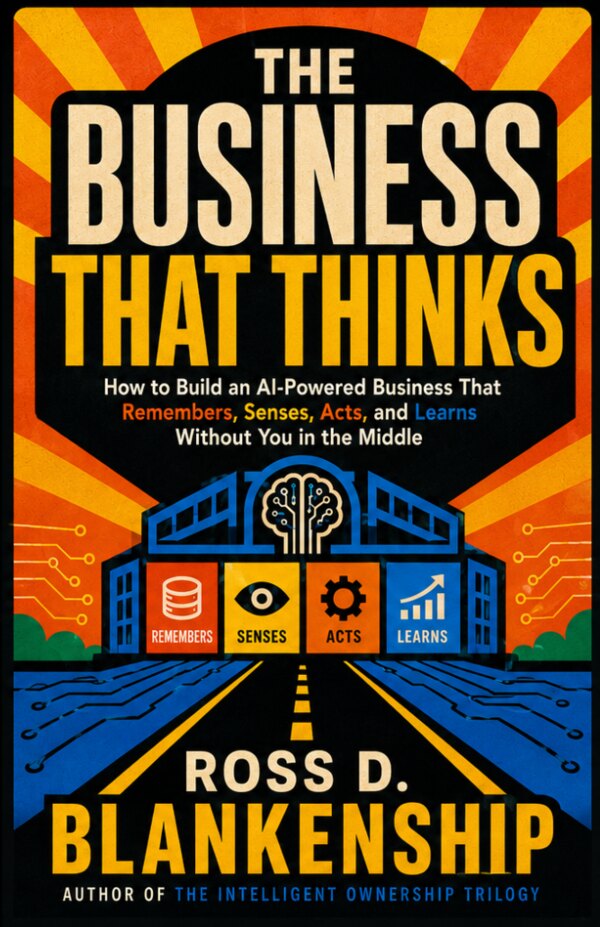
I've written and taught around startups, investing, cybersecurity, hiring, and company-building. That material reflects how I think, but it is not the center of the site. The center is building and leading serious technology products tied to real assets and real-world systems.
A practical course on startup judgment, valuation, and how serious opportunities are identified earlier than the market sees them.
View teaching on UdemyMy filed invention work sits at the intersection of safety, communication, vehicles, and real-world operating systems. The pattern is consistent: better systems create better outcomes.
If you're building in real estate technology, proptech, parking technology, mobility infrastructure, AI, EV charging, or vehicle-oriented asset platforms and need stronger product and technical leadership, reach out with something specific.
Concise, specific outreach is best.